A short, focused, beautifully presented co-op adventure that we did not want to end.
I rolled credits on Orbitals, sat there for a second, and realized I did not want it to be over.
Watch the video review
 Orbitals Review: An Anime You Can Play, and I Didn’t Want It to End
Want to play it? Check the price on Amazon or see every option in Where to buy.
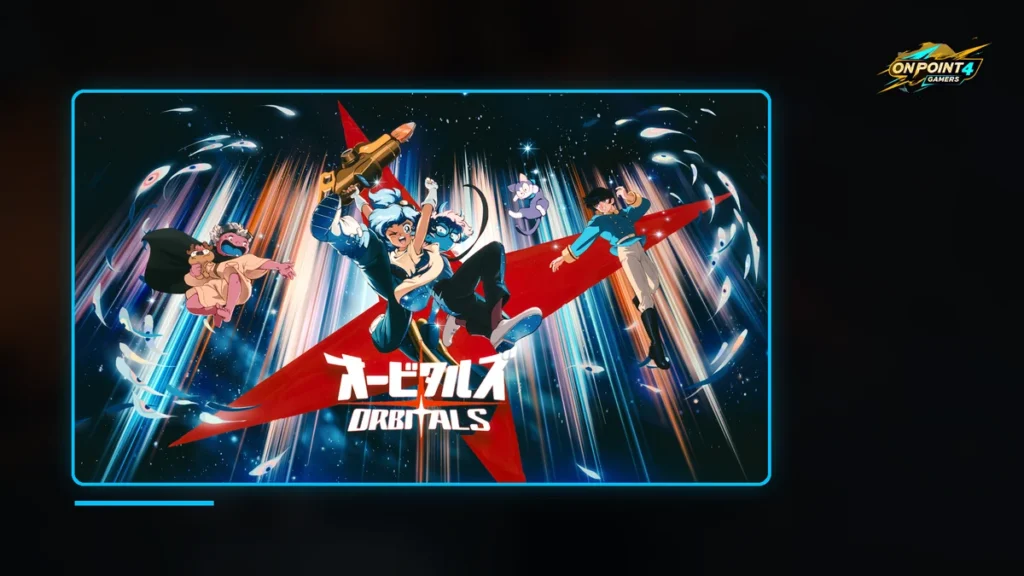
Orbitals is a two-player, co-op-only adventure from Tokyo studio Shapefarm, published by Kepler Interactive, the same publisher behind Clair Obscur: Expedition 33. It’s a Nintendo Switch 2 exclusive. You play as childhood best friends Maki and Omura, leaving their crumbling space station home to find help beyond a supernatural cosmic storm that has trapped everyone inside. Communication is everything. If you don’t talk, you stall. If you do, it clicks in a way that feels special. This one is special.
Visuals: Saturday morning, and you're in it
This is the part that kept stopping me mid-sentence. I kept feeling like I was playing an anime that was live on TV, like somebody left a Saturday morning tape running, handed me the remote and said, “You’re in it now.”
Orbitals runs on Unreal Engine 5, and you’d never know it. Shapefarm built a custom look that copies how ’80s anime was actually made, not the modern anime shader slapped on realistic models. Anything that moves, from Maki and Omura to water, sparks and the ship, is cel-shaded with hard edges and flat color. Anything that stays still is treated like a painted background, with watercolor and brush strokes. They even keep the little imperfections that made old anime feel alive, like outlines that thin out and almost break, plus film grain and soft VHS fuzz. It’s not a filter. It’s the whole picture. Characters are animated at deliberately limited frame rates the way old shows were, so every run, gesture and reaction face pops off the screen.
The locations feel like different episodes of the same series: a warm, cramped, lived-in home station (with a cat you can pet), a retro-future cockpit, lava-soaked industrial repairs, crystal caves, music-themed spaces and asteroid interiors. Cutscenes animated by Studio Massket hand off to gameplay with zero seam, and the big old-school chapter title cards had me wanting to screenshot every single one.
Story: A finale that actually lands
I’ll keep this spoiler-light, because the ending is a big reason it hits. Maki is the strong-headed mechanic. Omura is the quieter cartographer, always a little lost in his own head. Fire and ice, impulse and patience, two people who know each other too well to quit. There’s even a story reason they can take hits and keep getting back up, and it hints that this world is darker underneath than it looks.
What I didn’t expect was how heartfelt the wrap-up is. The story finishes. It doesn’t shrug and fade out. It’s surprisingly emotional for a game that also has you yelling “No, your other left!” at your partner. Silly in the middle, sincere when it counts. That’s the classic anime trick. One tip: the puzzles get so engrossing that it’s easy to miss story beats, so slow down in the quiet moments. It’s worth it.
Gameplay: Co-op built from the ground up
This isn’t a single-player game with a friend bolted on. It’s always two people, in local split-screen or online through Switch 2 GameShare and the Orbitals Global Friend’s Pass, so your partner doesn’t even need to own the game.
Your tools are the stars, like the Scrap Hook that yanks, opens and repositions, and the Liquid Launcher, an oversized water cannon that puts out fires and cools surfaces. Nobody gets locked into the boring gadget. Puzzles are clever and unique, mini-games keep the pace up, and boss fights play like co-op tests rather than health-bar slogs. There’s no trash-mob combat. When you fight, it’s ship defense: one of you flies, one mans the turret, and you learn the pattern together. The flight feels like real control, not a toy.
The polish is everywhere. The camera pulls out for two-person puzzles and tightens up when you need to read a device, so you never fight it. Loading is quick and hidden. Checkpoints are forgiving, which keeps a genuinely challenging game from ever becoming tedious. Game director Jakob Lundgren previously worked at Hazelight on A Way Out, It Takes Two and Split Fiction, and you can feel that DNA, but Orbitals has its own identity.
Sound: It sounds like a show
English and Japanese are both fully voiced, along with several other languages, and it sounds like a real anime, not a dub phoned in after the fact. Maki and Omura have rhythm, and side characters have texture. The music swells when it should and gets out of the way when you need to think. If you used to leave Toonami on just for the vibe, this soundtrack is going to live in your head.
Verdict
Orbitals is an anime you can play, and I didn’t want it to end. Shapefarm and Kepler made a short, focused, beautifully presented co-op adventure that respects your time, the art style it’s channeling, and the person sitting next to you. Eleven chapters and about six and a half hours, with no filler, plus a mini-game mode that unlocks after the credits. The only asterisk is the tax on every co-op-only game: you need a partner’s schedule to play. But beating these problems together has a magic a solo campaign can’t fake. At $39.99 digital or $49.99 physical, with the full game on the cartridge, grab a friend and grab this.
Image: Shapefarm / Kepler Interactive
More on OnPoint: Minecraft Dungeons II Review: Finally, a World Worth Living In and Gears of War: Reloaded Review: The One That Started It All, Polished Up.
The verdict: Masterpiece
Orbitals is an anime you can play, and I didn't want it to end.
Pros
- A jaw-dropping, authentic '80s anime art style
- A heartfelt story with a real finale
- Clever puzzles, tools and boss fights built for two
- Excellent voice acting and soundtrack
- Smart camera, hidden loading and fair checkpoints
Cons
- Co-op only, so you always need a partner
- Puzzles are so absorbing that story beats are easy to miss
Platform played: Nintendo Switch 2 (two-player co-op)
Where to buy
As an Amazon Associate I earn from qualifying purchases.