
Microsoft's October 2026 GDK quietly adds an experimental AMD shader compiler built on open-source Linux tech, and early developer testing shows gains of 2% to 16% on the consoles you already own.
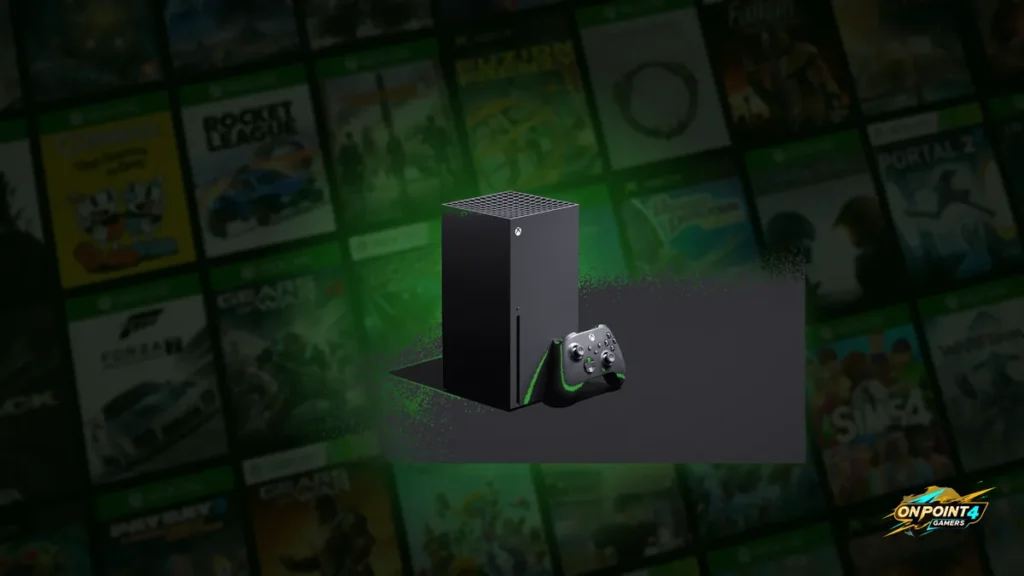
Xbox Series X and Series S are six years into this generation, and Microsoft is still finding free performance in them. Tucked into the October 2026 Microsoft Game Development Kit is an experimental new shader compiler for both consoles, and Microsoft says developers testing it have seen improvements “in the range of 2-16%, depending on game engine, content, and current shader bottlenecks.” No new hardware, no Pro model, just better software running on the boxes already under your TV.
The compiler is called ACO, short for AMD Compiler, and it comes from Mesa, the open-source graphics stack that runs AMD GPUs on Linux. That’s the same tech inside the RADV Vulkan driver, which is what Valve’s Steam Deck uses to run games. In other words, a tool the Linux and Steam Deck crowd has leaned on for years is now being pointed at Xbox Series X|S, which run on AMD RDNA 2 graphics.
Xbox Series X|S could get faster shaders thanks to open-source AMD compiler
, VideoCardz.com (@VideoCardz) November 17, 2026
🔗https://t.co/dO9t9X0Ojg pic.twitter.com/bSkWORh3U2
What Microsoft actually said
The details come straight from Microsoft’s own GDK release notes, which describe it as an “experimental new shader compiler” for Xbox Series X|S “based on ACO from Mesa.” Microsoft says the Xbox team is working to bring “further optimizations to game developers’ shader compilation and runtime performance,” and that developers “may find significant improvements in compilation and runtime performance” compared with the standard Xbox shader compiler.
That word “runtime” is the part that matters for players. Shaders are the small programs your GPU runs constantly to draw lighting, materials and effects, so making them compile faster helps developers, and making them run faster can help the game itself. As Wccftech explains, ACO was built specifically for AMD’s GCN and RDNA architectures and focuses on smarter instruction scheduling, register allocation and handling of branching code, all of which can cut GPU overhead.
Now the honest fine print. This is a developer tool, not a system update you download. Microsoft frames ACO as “an optimization tool” that studios can test against their own games, and it points them to its documentation, samples and developer forums. VideoCardz notes Microsoft hasn’t shared per-game benchmarks, hasn’t said how much of that 2% to 16% comes from faster compiling versus faster GPU work, and hasn’t named any games using it. There’s also no sign it replaces the standard Xbox compiler across the board. So don’t expect your current library to suddenly run better tomorrow. Expect developers who adopt it to have a little more headroom to play with.
It’s part of a bigger push to squeeze more out of Series X|S
ACO isn’t landing alone. The same October GDK brought AMD FSR Upscaling 4.1.2 to Xbox Series X|S, which we covered when it hit developers. Microsoft’s notes say that’s AMD’s machine learning upscaling on Xbox “for the first time,” with a Full INT8 model and a new Lite INT8 model that is “less than half the size and has a lower upscaling cost.” Microsoft also claims its Xbox-specific tuning delivers “higher upscaling throughput per teraflop than AMD RDNA 2 architecture PC GPUs running the same Full INT8 model.”
Up to 16% faster shaders on Series X|S. Your call?
Vote and see what other Xbox fans think.
Like having a say? Get OnPoint Weekly or argue it out on Discord.
Put those two together and you see the plan. FSR 4.1.2 helps games render at a lower resolution and still look sharp, and ACO can make the shader work behind every frame cheaper. Both give developers more room to push resolution, frame rate or effects on hardware that launched in 2020.
Why this matters for Xbox and PC players
Here’s what a lot of people will miss: this is Xbox borrowing from the open PC ecosystem instead of walling itself off from it. Microsoft taking a compiler from the Linux and Steam Deck world and tuning it for Xbox is exactly the kind of PC-meets-console thinking that fits where Xbox is heading, with the Xbox PC app and Play Anywhere already bringing console and PC closer together. For PC players, it’s a nice nod to the open-source work on AMD graphics that keeps getting better.
For Series X|S owners, it’s simple. Your console is not done. Between ML upscaling and a faster shader path, developers have two fresh tools to get more out of the same box, and that matters a lot heading into the biggest launch week of the year. Whether it shows up in a game you play depends on studios picking it up, and that’s the part we’ll be watching.
Image: Xbox
Sources found below.