
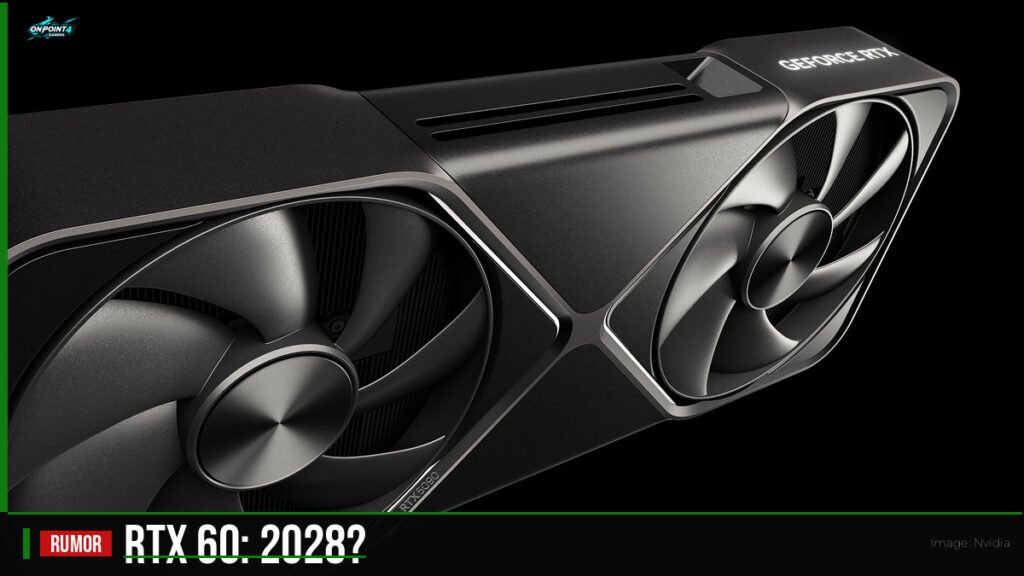
A new supply chain report out of Taiwan says Nvidia is cutting RTX 50 shipments and pouring capacity into AI hardware, and the RTX 60 series, once aimed at late 2027 mass production, may now land even later.
If you’ve been holding out for Nvidia’s next generation of GeForce cards, here’s some bad news for your wallet and your patience. Taiwanese finance outlet Commercial Times reports that Nvidia’s GeForce RTX 60 series, “originally targeted for mass production by the end of 2027,” “may now face delays,” according to its supply chain sources, as quoted by Club386. This is a rumor from unnamed industry sources, not an announcement, and Nvidia has not said anything about it.
The same report says the cards you can buy today are getting squeezed too. “It is understood that Nvidia will reduce its supply of GeForce RTX 50 series gaming graphics cards, and the next-generation RTX 60 series upgrade may also be slowed down,” Commercial Times writes, per Club386’s translation.
Why gaming GPUs keep losing
It comes down to two things: memory and factory time. According to the report, “memory manufacturers are prioritising advanced capacity for server DRAM, limiting the production of GDDR7 for graphics cards, leading to continued increases in graphics memory prices.” GDDR7 is the memory on nearly every RTX 50 card, so when the people making it would rather sell server memory to AI companies, gamers end up at the back of the line.
The chips themselves are the other problem. Commercial Times says Nvidia’s main ODM partners in Taiwan “have shifted to the B300, GB300, and Vera Rubin platforms,” and TrendForce, summarizing the report, adds that industry sources expect wafer capacity freed up by trimming RTX 50 production to be redirected toward data center chips.
How hot is that AI demand? Per the report, new orders for Nvidia’s B300 data center GPUs now carry lead times of 26 to 40 weeks, GB300 orders run 14 to 26 weeks, and RTX Pro workstation and server cards are past 26 weeks. Most new orders placed over the past two quarters aren’t expected to ship until the second or third quarter of 2027 or later. When Nvidia can sell everything it builds to data centers for that long, it’s not hard to see why a gaming card refresh drops down the list.
This isn’t the first warning
The RTX 60 slide has been building all year. TrendForce points back to a February report from The Information that Nvidia postponed a planned RTX 50 refresh to save memory for AI chips, and to a September TechSpot report that suggested Nvidia’s Rubin-based RTX 60 cards and most of AMD’s RDNA 5-based Radeon gaming lineup could be pushed to 2028. TrendForce also cites TechPowerUp reporting that Micron is discontinuing its 2GB GDDR7 chips, which would narrow Nvidia’s memory options even further.
It fits what PC players have been living through on store shelves. Just yesterday we covered a separate rumor that Nvidia is cutting gaming GPU supply by another 20 to 30 percent through January, and earlier this month we covered a report that GPU makers were steering buyers toward the five-year-old RTX 3060 because RTX 50 stock was drying up. TweakTown notes board makers could lean on RTX 50 cards to fill the gap, but that gets harder if Nvidia is dialing those down at the same time.
If the RTX 60 rumor is true, what's your move?
Vote and see what other Xbox fans think.
Like having a say? Get OnPoint Weekly or argue it out on Discord.
What it means if you game on PC
Our read: if this report is right, the RTX 50 series you can buy now is going to be the top of the mountain for a long time, and prices are not likely to get friendlier before the next generation shows up. That makes the stuff that squeezes more out of the hardware you already own, DLSS, frame generation, FSR and plain old good optimization, more important than any spec sheet for the next couple of years. Developers who ship PC ports that run well on mid-range cards are going to win, and the ones who lean on a 5090 to brute force bad code are going to hear about it.
And here’s the part Xbox players can smile about. A Series X or Series S in your living room doesn’t care what’s happening to GDDR7 allocations at the GPU board partners, and Xbox’s play-anywhere push means a lot of your library follows you to PC whenever you do decide to upgrade. Still, keep the Rumor tag in mind. Commercial Times is citing unnamed supply chain sources, timelines this far out move constantly, and Nvidia hasn’t confirmed a thing.
Sources found below.